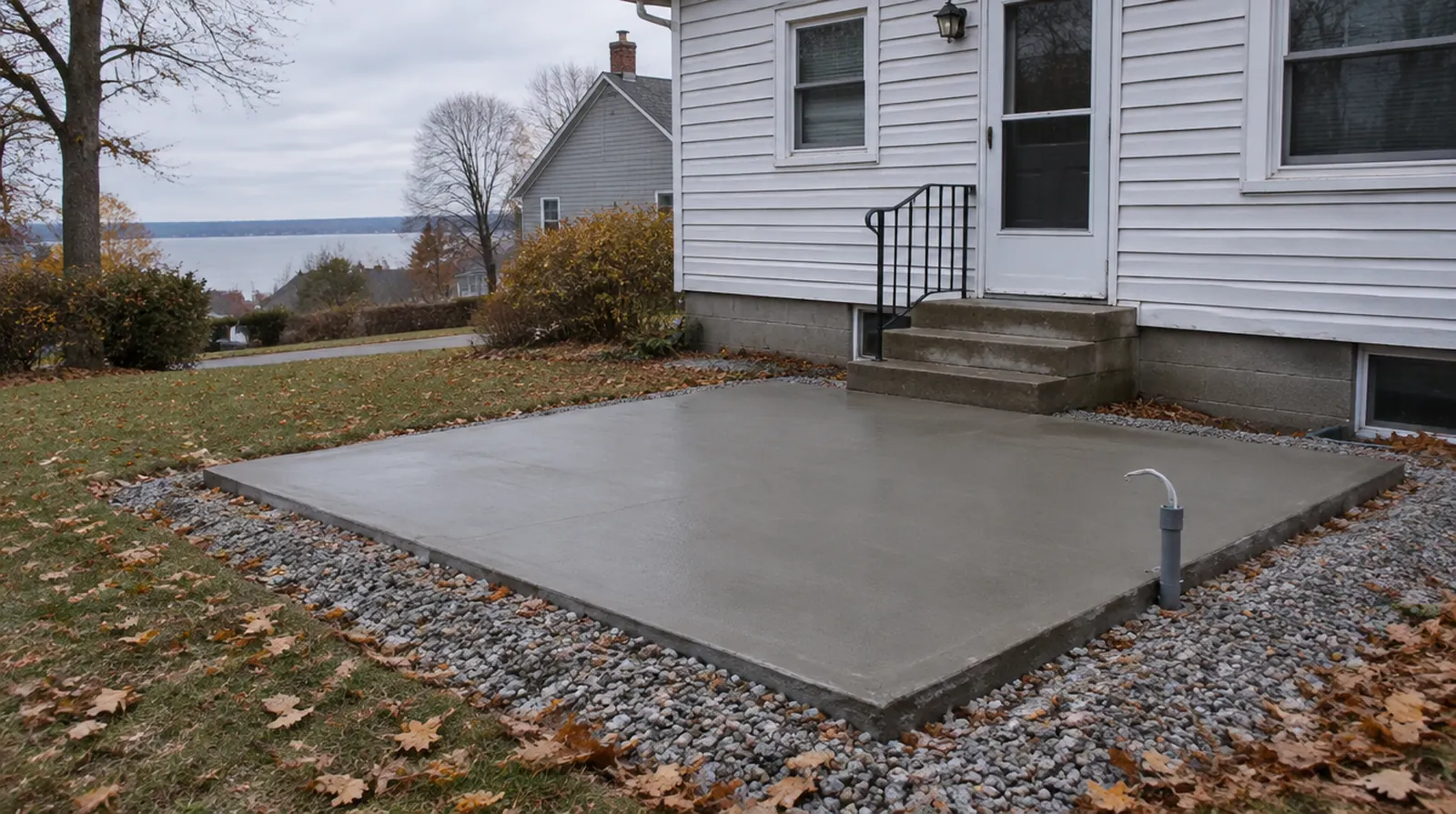
Hot tub pads
A filled spa is one of the heaviest things that ends up in a backyard, and it needs to sit dead level, or the water line and the cover will be off and the shell can be stressed. Pavers and gravel beds can settle unevenly over a few winters. A reinforced concrete pad spreads the load. We size the pad a little larger than the tub so there is room to step around it and to get at the access panels, and we can leave a conduit sleeve in the slab for the electrician to run the dedicated circuit to the disconnect. Check the maker's spec sheet before we pour. Some brands list a minimum slab thickness for the warranty.
Detached garage and carport floors
Plenty of houses in the neighborhoods off Titus Avenue and around Culver Road have a single-car garage at the back of the lot, built in the forties or fifties, with a floor that has cracked, sunk at the door or crumbled from decades of salt. We can break the old floor out inside the existing walls and pour a new one, or pour the full slab for a new garage. Garage slabs get a thickened edge, steel, a pitch to the door and an air-entrained mix that holds up to freeze-thaw and brine better than ordinary concrete.
Sheds, generators and everything else
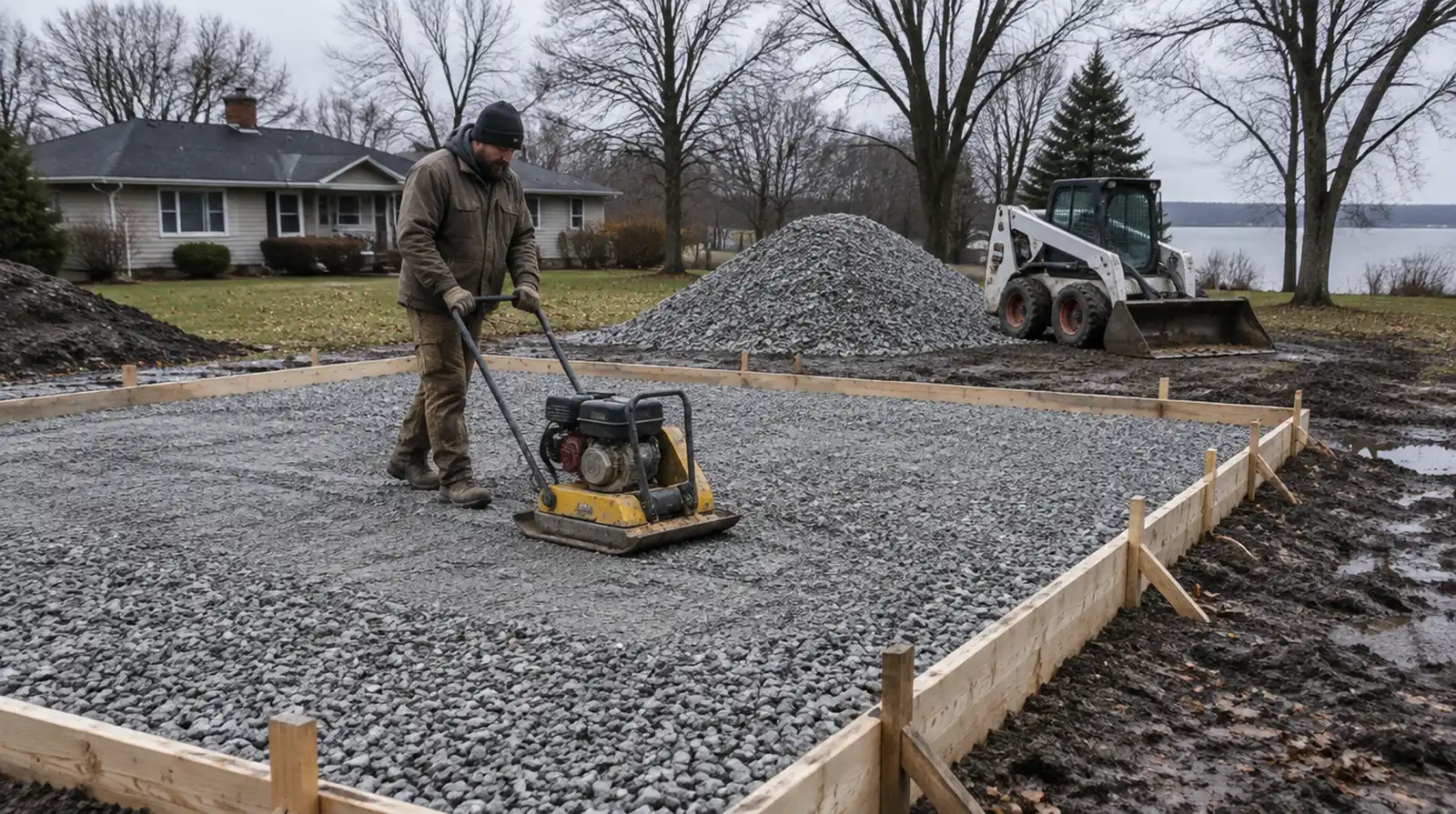
Smaller pads go under garden sheds, standby generators, heat pump units and firewood racks. The work is the same in miniature: dig out the topsoil, build up a compacted stone base, form it square, reinforce it and finish it. A level pad keeps shed doors swinging freely and keeps equipment from tilting as the ground moves.
Why the base matters here
Much of the town sits on the old lake plain, with soils that hold water and heave when they freeze. Snow piles up along the lakeshore in a typical winter, and spring melt saturates everything. A slab poured on wet, soft ground rocks and cracks as the frost lifts it unevenly. Our base is crushed stone, placed in lifts and compacted with a plate tamper, which drains water away from the underside of the slab. On low, wet lots near Irondequoit Bay or the creeks, we may go deeper and slope the grade so meltwater runs away from the pad.
Permits
The Town of Irondequoit requires a building permit for sheds over 30 square feet, and a larger accessory building is treated as a private garage, with its own rules. The application typically asks for a survey map showing where the building will sit and a cross-section drawing. Pools and hot tubs have their own permit and safety requirements, including barriers and electrical. Call the town Building Department before you buy, so the slab can be poured in an approved location at the right size.
Timing
Most pads are a two-visit job: one day to dig, build the base and set forms, and another to pour and finish. Concrete needs time to gain strength, so plan on about a week before setting a hot tub or shed and a bit longer before driving onto a new garage floor. We pour from spring through fall and stop once the ground freezes, because concrete cannot be placed on frozen soil.
Cost factors
Size and thickness set the base price. Demolition of old concrete, getting equipment into a fenced backyard, extra base work on wet ground, rebar, conduit sleeves and anchor bolts all add to it. You get a written quote after we see the site.
Questions
Can a slab go next to the house?
Yes. We pitch it away from the foundation so water does not end up in the basement.
Do you add a patio at the same time?
Often. A hot tub pad is easy to tie into a new patio or stamped surround.
Tell us what the slab is for
A hot tub, a shed, a garage? Send the size and a photo of the spot, and we will come measure and give you a written price.